Habib Koité

Afropop

Habib Koité


Habib Koité Tour & Ticket Details

  • Upcoming shows
  • Past shows

About Habib Koité

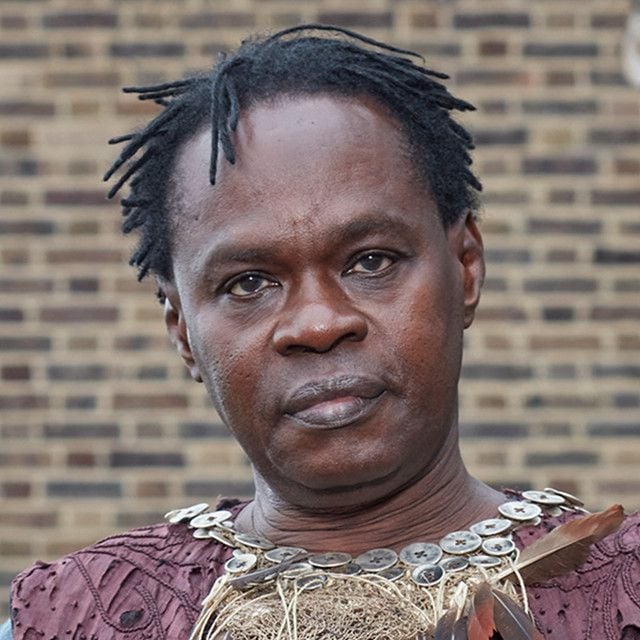
The West African country of Mali has produced some great musicians. But as they age, people have wondered who'll step forward from the next generation. The big answer to that seems to be Habib Koité, who comes from the Khassonké griot tradition, that's the hereditary caste of musicians, but whose eyes are firmly on the future. Born in 1958, his lineage made music a part of his life and it was in order to accompany his mother's singing that he taught himself to play guitar, showing enough ability on the instrument that he was accepted at the National Institute of Arts (NIA) -- remaining there four years after his graduation in 1982 to teach guitar. From his early days, he hasn't played just in the standard Western tuning, but also traditional Malian tunes to make his instrument mimic the traditional n'goni (a four-string lute) and kamele n'goni, or young man's harp, with six strings, giving a richness and native texture to his work. Being at NIA afforded him the opportunity to play with some of the country's top musicians, including the likes of kora giant Toumani Diabaté. It wasn't until he was 30 that Koité decided to form a band, Bamada, and they toured extensively throughout Mali, before heading to the Perpignan Voxpole Festival in France in 1991, where they took first prize. That brought them the chance to record two songs, one of which, "Cigarette A Bana" ("The Cigarette Is Finished"), became a hit across West Africa, to the extent that children would sing its chorus in the streets. That led to another single, "Nanale" ("The Swallow"), and the Discovery of 1993: Media-Adami Award by Radio France International. In the wake of that, came Koité's first album, Muso Ko, which topped the European World Music charts (released in the U.S. 1999 on Alula Records). While many Malian musicians interpreted the tradition, artists who used it as a springboard for their own writing were -- and still are -- rare. But Koité's studies had grounded him in regional styles and rhythms, while his guitar work was strong and often subtle, enough to take in the music and spit it out as something new and fresh. As he said, "My way to play traditional music is to adapt the sounds of the traditional instruments from Mali through my acoustic guitar." By the time Ma Ya appeared -- it became his first American release, early in 1999 -- Koité had matured, both as a writer and a player. Socially conscious, his work had the natural infectiousness of good pop music, with the solid rhythmic and melodic base of Mali. The album, he stated was meant to be "a musical voyage through Mali. I give myself the freedom to move from one rhythm to another." Like Koité, Bamada had also come a long way, offering imaginative, sympathetic backing to his material and voice, although there was no doubt who was the star of the show. In summer 2001, he released his third disc, Bora. ~ Chris Nickson, Rovi

Read more

Popular song

Habib Koité fans also like

Habib Koité's Tour

About Habib Koité

The West African country of Mali has produced some great musicians. But as they age, people have wondered who'll step forward from the next generation. The big answer to that seems to be Habib Koité, who comes from the Khassonké griot tradition, that's the hereditary caste of musicians, but whose eyes are firmly on the future. Born in 1958, his lineage made music a part of his life and it was in order to accompany his mother's singing that he taught himself to play guitar, showing enough ability on the instrument that he was accepted at the National Institute of Arts (NIA) -- remaining there four years after his graduation in 1982 to teach guitar. From his early days, he hasn't played just in the standard Western tuning, but also traditional Malian tunes to make his instrument mimic the traditional n'goni (a four-string lute) and kamele n'goni, or young man's harp, with six strings, giving a richness and native texture to his work. Being at NIA afforded him the opportunity to play with some of the country's top musicians, including the likes of kora giant Toumani Diabaté. It wasn't until he was 30 that Koité decided to form a band, Bamada, and they toured extensively throughout Mali, before heading to the Perpignan Voxpole Festival in France in 1991, where they took first prize. That brought them the chance to record two songs, one of which, "Cigarette A Bana" ("The Cigarette Is Finished"), became a hit across West Africa, to the extent that children would sing its chorus in the streets. That led to another single, "Nanale" ("The Swallow"), and the Discovery of 1993: Media-Adami Award by Radio France International. In the wake of that, came Koité's first album, Muso Ko, which topped the European World Music charts (released in the U.S. 1999 on Alula Records). While many Malian musicians interpreted the tradition, artists who used it as a springboard for their own writing were -- and still are -- rare. But Koité's studies had grounded him in regional styles and rhythms, while his guitar work was strong and often subtle, enough to take in the music and spit it out as something new and fresh. As he said, "My way to play traditional music is to adapt the sounds of the traditional instruments from Mali through my acoustic guitar." By the time Ma Ya appeared -- it became his first American release, early in 1999 -- Koité had matured, both as a writer and a player. Socially conscious, his work had the natural infectiousness of good pop music, with the solid rhythmic and melodic base of Mali. The album, he stated was meant to be "a musical voyage through Mali. I give myself the freedom to move from one rhythm to another." Like Koité, Bamada had also come a long way, offering imaginative, sympathetic backing to his material and voice, although there was no doubt who was the star of the show. In summer 2001, he released his third disc, Bora. ~ Chris Nickson, Rovi

Habib Koité's Concerts & Tour Dates

Date Event name Venue
23 Oct 2026 Habib Koité, Sura Susso in Bristol The Lantern at Bristol Beacon, Bristol, EN, United Kingdom

Habib Koité's Popular songs

  • Wassiye
  • Batoumambe
  • Chasing Peace Of Mind (with Habib Koitu00e9 & Ami Faku)
  • Bolo Mala
  • Saramaya

Frequently Asked Questions

The West African country of Mali has produced some great musicians. But as they age, people have wondered who'll step forward from the next generation. The big answer to that seems to be Habib Koité, who comes from the Khassonké griot tradition, that's the hereditary caste of musicians, but whose e…
Habib Koité's most streamed songs include Wassiye, Batoumambe, Chasing Peace Of Mind (with Habib Koitu00e9 & Ami Faku), Bolo Mala, Saramaya. These tracks have accumulated millions of plays on Spotify and other major streaming platforms, making them essential listens for both new fans and long-time followers.
Habib Koité is primarily known for afropop, frequently fusing it with elements of griot. This genre-blending approach has earned them a dedicated global fanbase and consistent chart placements on platforms like Beatport and Spotify.
You can stream Habib Koité's music on Spotify, Apple Music, YouTube Music, and Amazon Music. Popular tracks like Wassiye, Batoumambe, Chasing Peace Of Mind (with Habib Koitu00e9 & Ami Faku), Bolo Mala, Saramaya are available on all major platforms. Follow Habib Koité on Spotify to stay updated on new releases.
Habib Koité has over 146.9K+ monthly listeners on Spotify, reflecting a strong and growing global fanbase.
Habib Koité has an upcoming show in Bristol. Visit AllEvents to find the date, venue, and ticket details.
Habib Koité is currently touring in United Kingdom in 2026. Check AllEvents for the full Habib Koité 2026 tour schedule, including dates, venues, and tickets.
You can also follow Habib Koité on AllEvents to get notified about upcoming concerts and live events near you.
You can find and buy tickets for Habib Koité concerts on AllEvents. Browse upcoming shows, compare dates and venues, and secure your spot before they sell out. Habib Koité is known for high-energy live performances, so tickets tend to go fast.