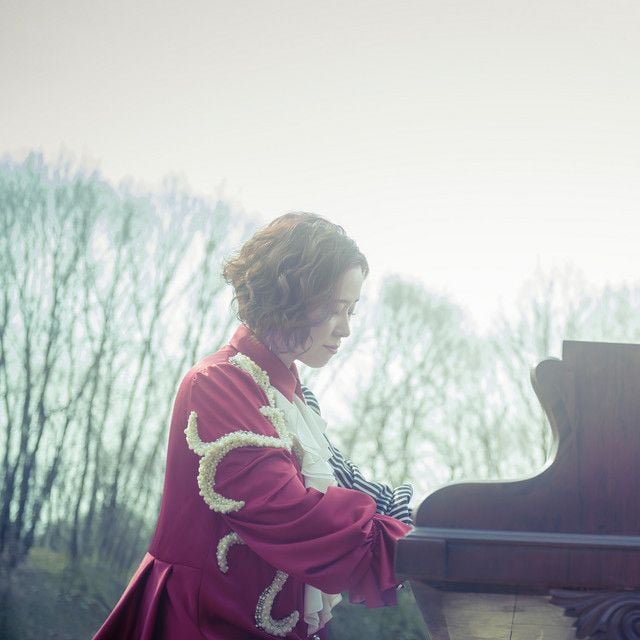
Akira Yamaoka

Japanese Soundtrack

Akira Yamaoka

Upcoming Akira Yamaoka Tour

No Events
Artist isn’t on tour right now. Be the first to know when shows come up


About Akira Yamaoka

Master of aural gloom and suspense, the Japanese musician and composer Akira Yamaoka is best-known for his work on the soundtrack for the Silent Hill video game series, where he used a mixture of ambient, trip-hop, rock, and industrial to chilling effect. The Niigata-born Yamaoka, who names Depeche Mode, Metallica, and Angelo Badalamenti as his influences, initially wanted to be a designer, and graduated from Tokyo Art College, but fell under the sway of artists such as Mick Karn of Japan and Steve Strange of Visage, who, in Yamaoka's words, "combined the notions of Art and Music with their own new style." He debuted in 1991 with the soundtrack to Smart Ball game, done with Yasuhiko Fukuda and Manabu Saito; in 1993, he joined Konami and continued to work on game soundtracks, keeping a relatively low profile through most of the ‘90s. His big break came in 1999, when he convinced the producers that he was the man to score the first Silent Hill game. It was a best-seller, and Yamaoka became the main composer for the whole franchise (excluding two minor spin-offs), adding duties as the producer of the game after Silent Hill 3 (2003); since the third installment of the series he also began working with vocalists Mary Elizabeth McGlynn and Joe Romersa. Music from Silent Hill 2 was performed at the Symphonic Game Music Concert in Leipzig in 2005, and in 2006, some compositions from the series were included in the "Play! A Video Game Symphony" live performance, Yamaoka with a seven-string guitar sharing the stage with an orchestra at its world premiere in Chicago. His music for the games was used in the 2006 movie adaptation of Silent Hill, which also included work by Jeff Danna; the same year Yamaoka released his debut album, the electronica-leaning iFUTURELIST, and then did soudntracks for the two next Silent Hill games, Origins and Homecoming, which followed in 2007 and 2008 respectively.

Read more

Popular song

Akira Yamaoka fans also like

About Akira Yamaoka

Master of aural gloom and suspense, the Japanese musician and composer Akira Yamaoka is best-known for his work on the soundtrack for the Silent Hill video game series, where he used a mixture of ambient, trip-hop, rock, and industrial to chilling effect. The Niigata-born Yamaoka, who names Depeche Mode, Metallica, and Angelo Badalamenti as his influences, initially wanted to be a designer, and graduated from Tokyo Art College, but fell under the sway of artists such as Mick Karn of Japan and Steve Strange of Visage, who, in Yamaoka's words, "combined the notions of Art and Music with their own new style." He debuted in 1991 with the soundtrack to Smart Ball game, done with Yasuhiko Fukuda and Manabu Saito; in 1993, he joined Konami and continued to work on game soundtracks, keeping a relatively low profile through most of the ‘90s. His big break came in 1999, when he convinced the producers that he was the man to score the first Silent Hill game. It was a best-seller, and Yamaoka became the main composer for the whole franchise (excluding two minor spin-offs), adding duties as the producer of the game after Silent Hill 3 (2003); since the third installment of the series he also began working with vocalists Mary Elizabeth McGlynn and Joe Romersa. Music from Silent Hill 2 was performed at the Symphonic Game Music Concert in Leipzig in 2005, and in 2006, some compositions from the series were included in the "Play! A Video Game Symphony" live performance, Yamaoka with a seven-string guitar sharing the stage with an orchestra at its world premiere in Chicago. His music for the games was used in the 2006 movie adaptation of Silent Hill, which also included work by Jeff Danna; the same year Yamaoka released his debut album, the electronica-leaning iFUTURELIST, and then did soudntracks for the two next Silent Hill games, Origins and Homecoming, which followed in 2007 and 2008 respectively.

Akira Yamaoka's Popular songs

  • The Day Of Night
  • Promise (Reprise)
  • White Noiz
  • Theme of Laura
  • End of Small Sanctuary
  • A World Of Madness
  • Forest
  • Blank Fairy
  • You're Not Here
  • Heaven's Night

Frequently Asked Questions

Master of aural gloom and suspense, the Japanese musician and composer Akira Yamaoka is best-known for his work on the soundtrack for the Silent Hill video game series, where he used a mixture of ambient, trip-hop, rock, and industrial to chilling effect. The Niigata-born Yamaoka, who names Depeche…
Akira Yamaoka's most streamed songs include The Day Of Night, Promise (Reprise), White Noiz, Theme of Laura, End of Small Sanctuary, A World Of Madness, Forest, Blank Fairy, You're Not Here, Heaven's Night. These tracks have accumulated millions of plays on Spotify and other major streaming platforms, making them essential listens for both new fans and long-time followers.
Akira Yamaoka is primarily known for japanese soundtrack, frequently fusing it with elements of japanese vgm. This genre-blending approach has earned them a dedicated global fanbase and consistent chart placements on platforms like Beatport and Spotify.
You can stream Akira Yamaoka's music on Spotify, Apple Music, YouTube Music, and Amazon Music. Popular tracks like The Day Of Night, Promise (Reprise), White Noiz, Theme of Laura, End of Small Sanctuary, A World Of Madness, Forest, Blank Fairy, You're Not Here, Heaven's Night are available on all major platforms. Follow Akira Yamaoka on Spotify to stay updated on new releases.
Akira Yamaoka has over 606.5K+ monthly listeners on Spotify, reflecting a strong and growing global fanbase.
You can also follow Akira Yamaoka on AllEvents to get notified about upcoming concerts and live events near you.
You can find and buy tickets for Akira Yamaoka concerts on AllEvents. Browse upcoming shows, compare dates and venues, and secure your spot before they sell out. Akira Yamaoka is known for high-energy live performances, so tickets tend to go fast.