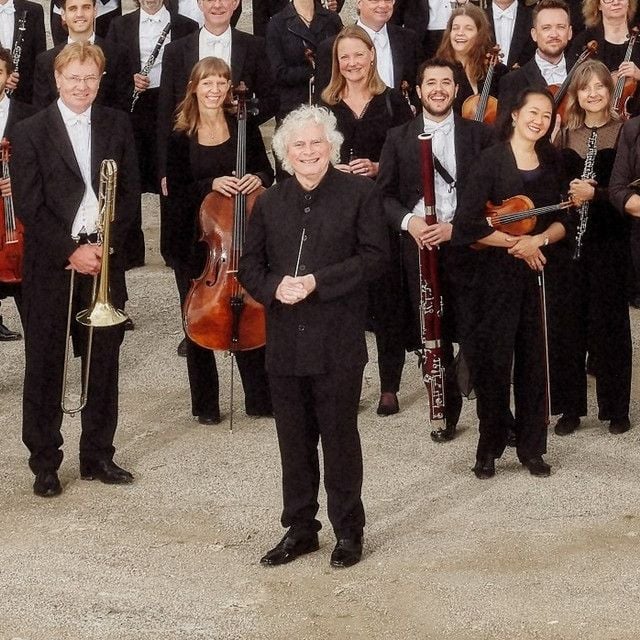
Wiener Symphoniker

Austrian Orchestra

Wiener Symphoniker


Wiener Symphoniker Tour & Ticket Details

  • Upcoming shows
  • Past shows

About Wiener Symphoniker

The Wiener Symphoniker (Vienna Symphony Orchestra) is a mainstay in European orchestral music, having premiered works that have become standard repertoire in the orchestral world. While its older neighbor, the Wiener Philharmoniker, may get more attention, the Wiener Symphoniker has cemented its role as a world-class orchestra. The Wiener Symphoniker was founded in 1900 as the Wiener Concertverein. The founder and first conductor of the orchestra was Ferdinand Löwe, who established the new orchestra to present more concerts to the citizenry and for the performance of new compositions. The orchestra's premiere concert took place at the Wiener Musikverein on October 30, 1900. Löwe, a student of Anton Bruckner's, led the Wiener Symphoniker in the premiere of Bruckner's ninth symphony in 1903. In 1913, the orchestra moved its performing venue to the newly opened Wiener Konzerthaus. Due to financial concerns following World War I, the orchestra merged with the Wiener Tonkünstlerorchester in 1919. Löwe served as chief conductor until 1925. He was followed by Otto Gottesmann and Wilhelm Furtwängler. In 1933, the orchestra was renamed the Wiener Symphoniker. Oswald Kabasta led the orchestra from 1934-1938. Under Kabasta, the orchestra embarked on its first international tour to England and Italy. In 1938, following the invasion of Austria, the orchestra was brought under municipal control and was used for propaganda during World War II. The orchestra was disbanded in September of 1944. Following the war, the Wiener Symphoniker was re-established in 1945 and gave its first post-war concert in September under the leadership of Hans Swarowsky and Josef Krips. Since 1946, the orchestra has taken part in and been a major sponsor of the Bregenzer Festspiele. Herbert von Karajan (1950-1960) and Wolfgang Sawallisch (1960-1970) are credited most with the revival of the Viennese sound for which the Wiener Symphoniker is known. In 1962, the Theater an der Wien reopened, and the Wiener Symphoniker has since performed there for staged productions. Since Sawallisch, the chief conductors for the orchestra have included Carlo Maria Giulini (1973-1976), Gennady Rozhdestvensky (1981-1983), and Rafael Frühbeck de Burgos (1991-1996). Philippe Jordan became the chief conductor in 2014, with a contract running through 2021. In 2018, the Wiener Symphoniker announced Andrés Orozco-Estrada as its next chief conductor. Orozco-Estrada is set to take the baton in 2021. Among the illustrious names who have guest conducted the orchestra are Leonard Bernstein, Zubin Mehta, and Claudio Abbado. The Wiener Symphoniker can be heard on hundreds of albums on major labels such as Decca, Deutsche Grammophon, EMI Classics, and Orfeo, among many others. Since 2012, the orchestra has also recorded for its own Wiener Symphoniker label, on which it has recorded works by composers such as Mahler, Bruckner, and Berlioz. Under Jordan, the orchestra has recorded a full cycle of Beethoven's symphonies. The first, Symphonies Nos. 1 & 3, was released in 2017. The final two individual albums of this cycle, Symphonies Nos. 6 & 8 and Symphony No. 9, as well as the complete cycle set, were released in 2019.

Read more

Popular song

Wiener Symphoniker fans also like

Wiener Symphoniker's Tour

About Wiener Symphoniker

The Wiener Symphoniker (Vienna Symphony Orchestra) is a mainstay in European orchestral music, having premiered works that have become standard repertoire in the orchestral world. While its older neighbor, the Wiener Philharmoniker, may get more attention, the Wiener Symphoniker has cemented its role as a world-class orchestra. The Wiener Symphoniker was founded in 1900 as the Wiener Concertverein. The founder and first conductor of the orchestra was Ferdinand Löwe, who established the new orchestra to present more concerts to the citizenry and for the performance of new compositions. The orchestra's premiere concert took place at the Wiener Musikverein on October 30, 1900. Löwe, a student of Anton Bruckner's, led the Wiener Symphoniker in the premiere of Bruckner's ninth symphony in 1903. In 1913, the orchestra moved its performing venue to the newly opened Wiener Konzerthaus. Due to financial concerns following World War I, the orchestra merged with the Wiener Tonkünstlerorchester in 1919. Löwe served as chief conductor until 1925. He was followed by Otto Gottesmann and Wilhelm Furtwängler. In 1933, the orchestra was renamed the Wiener Symphoniker. Oswald Kabasta led the orchestra from 1934-1938. Under Kabasta, the orchestra embarked on its first international tour to England and Italy. In 1938, following the invasion of Austria, the orchestra was brought under municipal control and was used for propaganda during World War II. The orchestra was disbanded in September of 1944. Following the war, the Wiener Symphoniker was re-established in 1945 and gave its first post-war concert in September under the leadership of Hans Swarowsky and Josef Krips. Since 1946, the orchestra has taken part in and been a major sponsor of the Bregenzer Festspiele. Herbert von Karajan (1950-1960) and Wolfgang Sawallisch (1960-1970) are credited most with the revival of the Viennese sound for which the Wiener Symphoniker is known. In 1962, the Theater an der Wien reopened, and the Wiener Symphoniker has since performed there for staged productions. Since Sawallisch, the chief conductors for the orchestra have included Carlo Maria Giulini (1973-1976), Gennady Rozhdestvensky (1981-1983), and Rafael Frühbeck de Burgos (1991-1996). Philippe Jordan became the chief conductor in 2014, with a contract running through 2021. In 2018, the Wiener Symphoniker announced Andrés Orozco-Estrada as its next chief conductor. Orozco-Estrada is set to take the baton in 2021. Among the illustrious names who have guest conducted the orchestra are Leonard Bernstein, Zubin Mehta, and Claudio Abbado. The Wiener Symphoniker can be heard on hundreds of albums on major labels such as Decca, Deutsche Grammophon, EMI Classics, and Orfeo, among many others. Since 2012, the orchestra has also recorded for its own Wiener Symphoniker label, on which it has recorded works by composers such as Mahler, Bruckner, and Berlioz. Under Jordan, the orchestra has recorded a full cycle of Beethoven's symphonies. The first, Symphonies Nos. 1 & 3, was released in 2017. The final two individual albums of this cycle, Symphonies Nos. 6 & 8 and Symphony No. 9, as well as the complete cycle set, were released in 2019.

Wiener Symphoniker's Concerts & Tour Dates

Date Event name Venue
23 Nov 2026 Wiener Symphoniker in Köln Kölner Philharmonie, Cologne, NW, Germany

Wiener Symphoniker's Popular songs

  • 3 Old Viennese Dances: No. 2, Liebesleid (Transcr. for Violin and Orchestra)
  • Strauss: Blue Danube Waltz, Op. 314
  • Violin Concerto in D Major, Op. 61: I. Allegro ma non troppo (Cadenza: Kreisler)

Frequently Asked Questions

The Wiener Symphoniker (Vienna Symphony Orchestra) is a mainstay in European orchestral music, having premiered works that have become standard repertoire in the orchestral world. While its older neighbor, the Wiener Philharmoniker, may get more attention, the Wiener Symphoniker has cemented its…
Wiener Symphoniker's most streamed songs include 3 Old Viennese Dances: No. 2, Liebesleid (Transcr. for Violin and Orchestra), Strauss: Blue Danube Waltz, Op. 314, Violin Concerto in D Major, Op. 61: I. Allegro ma non troppo (Cadenza: Kreisler). These tracks have accumulated millions of plays on Spotify and other major streaming platforms, making them essential listens for both new fans and long-time followers.
Wiener Symphoniker is primarily known for austrian orchestra, frequently fusing it with elements of classical performance. This genre-blending approach has earned them a dedicated global fanbase and consistent chart placements on platforms like Beatport and Spotify.
You can stream Wiener Symphoniker's music on Spotify, Apple Music, YouTube Music, and Amazon Music. Popular tracks like 3 Old Viennese Dances: No. 2, Liebesleid (Transcr. for Violin and Orchestra), Strauss: Blue Danube Waltz, Op. 314, Violin Concerto in D Major, Op. 61: I. Allegro ma non troppo (Cadenza: Kreisler) are available on all major platforms. Follow Wiener Symphoniker on Spotify to stay updated on new releases.
Wiener Symphoniker has over 301.8K+ monthly listeners on Spotify, reflecting a strong and growing global fanbase.
Wiener Symphoniker has an upcoming show in Cologne. Visit AllEvents to find the date, venue, and ticket details.
Wiener Symphoniker is currently touring in Germany in 2026. Check AllEvents for the full Wiener Symphoniker 2026 tour schedule, including dates, venues, and tickets.
You can also follow Wiener Symphoniker on AllEvents to get notified about upcoming concerts and live events near you.
You can find and buy tickets for Wiener Symphoniker concerts on AllEvents. Browse upcoming shows, compare dates and venues, and secure your spot before they sell out. Wiener Symphoniker is known for high-energy live performances, so tickets tend to go fast.