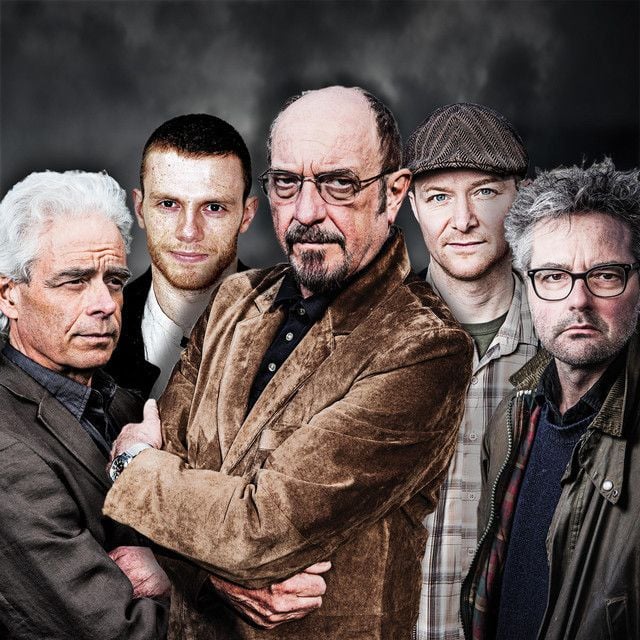
Rush

Album Rock

Rush

About Rush

Over four-plus decades, Canadian power trio Rush (bassist/keyboardist/vocalist Geddy Lee, guitarist Alex Lifeson, and drummer Neil Peart) became one of rock's most celebrated and enduring bands. Rush garnered a large and devoted following among hard rock, heavy metal, and prog audiences almost from the beginning. They sold over 40 million records and were nominated for seven Grammys between 1981-2010; they also netted 25 gold and/or platinum albums, and all but three entered the upper half of the Top 200. After 1981's chart-topping Moving Pictures, they began a seven-year period where their recorded sound was dominated by Lee's synth playing, which culminated on 1989's Presto. During the '90s, they shifted toward a hooky and radio-friendly brand of hard rock, best exemplified by 1996's Test for Echo. During their final period, they delivered studio offerings that fused heavy and prog in new ways; the last was 2012's conceptual Clockwork Angels. Rush amicably split in 2015 after Peart decided to retire from touring. He died from brain cancer in early 2020. Rush formed in Toronto, Ontario in the autumn of 1968, initially comprising guitarist Alex Lifeson (born Alexander Zivojinovich), vocalist/bassist Geddy Lee (born Gary Lee Weinrib), and drummer John Rutsey. In their primary incarnation, Rush drew a heavy influence from Cream, and honed their skills on the Toronto club circuit before issuing their debut single, a rendition of Buddy Holly's "Not Fade Away," in 1973. A self-titled LP followed in 1974, at which time Rutsey exited; he was replaced by drummer Neil Peart, who also assumed the role of the band's primary lyricist; his words gradually became a hallmark of the group's recording aesthetic. With Peart firmly ensconced, Rush returned in 1975 with a pair of LPs, Fly by Night and Caress of Steel. The former bore the radio hit "Fly by Night" and their first metal suite in "By-Tor and the Snow Dog." The album also contained "Anthem," whose title and subject matter reflected the inspiration of the dystopian novella of the same title by Russian-American writer and philosopher Ayn Rand; she would become an even greater inspiration to Peart on 2112 in 1976. 2112 proved their breakthrough release: a futuristic concept album based on the writings of Rand, it fused the elements of the trio's sound -- Lee's high-pitched vocals, Peart's epic drumming, and Lifeson's complex guitar work -- into a unified whole. Fans loved it -- 2112 was the first in a long line of gold and platinum releases. It established a modus operandi the band rarely deviated from for the duratorion of its career. A Farewell to Kings followed in 1977 and reached the Top 40 in both the U.S. and Britain. After 1978's Hemispheres, Rush achieved even greater popularity with 1980's Permanent Waves, a record marked by the group's dramatic shift into shorter, less-sprawling compositions; the single "The Spirit of Radio" even became a major hit at radio. With 1981's Moving Pictures, they scored with "Tom Sawyer," and "Red Barchetta." The former garnered heavy exposure on album-oriented radio and became what is probably the trio's best-known song. As the '80s continued, Rush grew into a phenomenally popular live draw, as albums like 1982's Signals (which generated the smash "New World Man"), 1984's Grace Under Pressure, and 1985's Power Windows continued to sell millions of copies. As the decade drew to a close, the trio cut back on their touring schedule. In the studio, they were exploring more textural, synth-driven efforts exemplified by 1987's Hold Your Fire (that featured Aimee Mann duetting with Lee on the charting title track single). At the dawn of the '90s, however, Rush returned to the heavier sound of their early records and placed a renewed emphasis on Lifeson's guitar sound--1991's Roll the Bones and 1993's Counterparts reached the Top Three on the U.S. album charts. In 1994, Rush were inducted into the Canadian Music Hall of Fame. In 1996, the band issued Test for Echo and headed for the road the following summer. In 1997, Peart lost his daughter in an automobile accident. The following year Peart's wife succumbed to cancer and he took a three year break from music. In early 2001, he rejoined his bandmates, but it would be years before Vapor Trails was released. A concert from the supporting tour was released to video as Rush in Rio. In 2004, Rush embarked on their 30th anniversary tour, documented on the DVD R30, and in 2006 they returned to the studio to begin work on a new album that resulted in the 2007's acclaimed Snakes & Arrows. A band associated documentary called Beyond the Lighted Stage appeared in 2010. Rush's 19th full-length studio concept album, Clockwork Angels, arrived in June 2012. While the following year wouldn't bring a new album, it did deliver the next best thing by way of Vapor Trails: Remixed. Along with it, Rush also released Clockwork Angels Tour, a three-disc live album recorded during their 2012 tour. The band took the next year off, and in 2013 were inducted into the Rock and Roll Hall Of Fame. They returned in 2014 with the R40 video box set, which was released to coincide with the 40th anniversary of Neil Peart's membership. The following year saw Rush embark on their North American R40 tour, which was purported to be their last large-scale tour. It was chronicled in the 2015 CD/DVD concert album R40 Live. Rush continued celebrating that anniversary for the next several years. They also undertook a reissue project that saw the release of deluxe remastered versions of catalog titles 2112, Caress of Steel, A Farewell to Kings, and Hemispheres. The latter proved bittersweet: In January of 2018, Lifeson told Toronto's Globe & Mail, "We have no plans to tour or record any more. We're basically done. After 41 years, we felt it was enough." Adding to the finality of Lifeson's statement, Neil Peart died on January 7, 2020, succumbing to a three-and-a-half-year battle with brain cancer. He was 67. ~ Jason Ankeny, Rovi

Read more

Popular song

Rush fans also like

Rush's Tour

About Rush

Over four-plus decades, Canadian power trio Rush (bassist/keyboardist/vocalist Geddy Lee, guitarist Alex Lifeson, and drummer Neil Peart) became one of rock's most celebrated and enduring bands. Rush garnered a large and devoted following among hard rock, heavy metal, and prog audiences almost from the beginning. They sold over 40 million records and were nominated for seven Grammys between 1981-2010; they also netted 25 gold and/or platinum albums, and all but three entered the upper half of the Top 200. After 1981's chart-topping Moving Pictures, they began a seven-year period where their recorded sound was dominated by Lee's synth playing, which culminated on 1989's Presto. During the '90s, they shifted toward a hooky and radio-friendly brand of hard rock, best exemplified by 1996's Test for Echo. During their final period, they delivered studio offerings that fused heavy and prog in new ways; the last was 2012's conceptual Clockwork Angels. Rush amicably split in 2015 after Peart decided to retire from touring. He died from brain cancer in early 2020. Rush formed in Toronto, Ontario in the autumn of 1968, initially comprising guitarist Alex Lifeson (born Alexander Zivojinovich), vocalist/bassist Geddy Lee (born Gary Lee Weinrib), and drummer John Rutsey. In their primary incarnation, Rush drew a heavy influence from Cream, and honed their skills on the Toronto club circuit before issuing their debut single, a rendition of Buddy Holly's "Not Fade Away," in 1973. A self-titled LP followed in 1974, at which time Rutsey exited; he was replaced by drummer Neil Peart, who also assumed the role of the band's primary lyricist; his words gradually became a hallmark of the group's recording aesthetic. With Peart firmly ensconced, Rush returned in 1975 with a pair of LPs, Fly by Night and Caress of Steel. The former bore the radio hit "Fly by Night" and their first metal suite in "By-Tor and the Snow Dog." The album also contained "Anthem," whose title and subject matter reflected the inspiration of the dystopian novella of the same title by Russian-American writer and philosopher Ayn Rand; she would become an even greater inspiration to Peart on 2112 in 1976. 2112 proved their breakthrough release: a futuristic concept album based on the writings of Rand, it fused the elements of the trio's sound -- Lee's high-pitched vocals, Peart's epic drumming, and Lifeson's complex guitar work -- into a unified whole. Fans loved it -- 2112 was the first in a long line of gold and platinum releases. It established a modus operandi the band rarely deviated from for the duratorion of its career. A Farewell to Kings followed in 1977 and reached the Top 40 in both the U.S. and Britain. After 1978's Hemispheres, Rush achieved even greater popularity with 1980's Permanent Waves, a record marked by the group's dramatic shift into shorter, less-sprawling compositions; the single "The Spirit of Radio" even became a major hit at radio. With 1981's Moving Pictures, they scored with "Tom Sawyer," and "Red Barchetta." The former garnered heavy exposure on album-oriented radio and became what is probably the trio's best-known song. As the '80s continued, Rush grew into a phenomenally popular live draw, as albums like 1982's Signals (which generated the smash "New World Man"), 1984's Grace Under Pressure, and 1985's Power Windows continued to sell millions of copies. As the decade drew to a close, the trio cut back on their touring schedule. In the studio, they were exploring more textural, synth-driven efforts exemplified by 1987's Hold Your Fire (that featured Aimee Mann duetting with Lee on the charting title track single). At the dawn of the '90s, however, Rush returned to the heavier sound of their early records and placed a renewed emphasis on Lifeson's guitar sound--1991's Roll the Bones and 1993's Counterparts reached the Top Three on the U.S. album charts. In 1994, Rush were inducted into the Canadian Music Hall of Fame. In 1996, the band issued Test for Echo and headed for the road the following summer. In 1997, Peart lost his daughter in an automobile accident. The following year Peart's wife succumbed to cancer and he took a three year break from music. In early 2001, he rejoined his bandmates, but it would be years before Vapor Trails was released. A concert from the supporting tour was released to video as Rush in Rio. In 2004, Rush embarked on their 30th anniversary tour, documented on the DVD R30, and in 2006 they returned to the studio to begin work on a new album that resulted in the 2007's acclaimed Snakes & Arrows. A band associated documentary called Beyond the Lighted Stage appeared in 2010. Rush's 19th full-length studio concept album, Clockwork Angels, arrived in June 2012. While the following year wouldn't bring a new album, it did deliver the next best thing by way of Vapor Trails: Remixed. Along with it, Rush also released Clockwork Angels Tour, a three-disc live album recorded during their 2012 tour. The band took the next year off, and in 2013 were inducted into the Rock and Roll Hall Of Fame. They returned in 2014 with the R40 video box set, which was released to coincide with the 40th anniversary of Neil Peart's membership. The following year saw Rush embark on their North American R40 tour, which was purported to be their last large-scale tour. It was chronicled in the 2015 CD/DVD concert album R40 Live. Rush continued celebrating that anniversary for the next several years. They also undertook a reissue project that saw the release of deluxe remastered versions of catalog titles 2112, Caress of Steel, A Farewell to Kings, and Hemispheres. The latter proved bittersweet: In January of 2018, Lifeson told Toronto's Globe & Mail, "We have no plans to tour or record any more. We're basically done. After 41 years, we felt it was enough." Adding to the finality of Lifeson's statement, Neil Peart died on January 7, 2020, succumbing to a three-and-a-half-year battle with brain cancer. He was 67. ~ Jason Ankeny, Rovi

Rush's Concerts & Tour Dates

Date Event name Venue
26 Jun 2026 RUSH: Fifty Something Dickies Arena, Fort Worth, TX, United States
18 Jul 2026 RUSH: Fifty Something United Center, Chicago, IL, United States
01 Aug 2026 RUSH: Fifty Something Madison Square Garden, New York, NY, United States
13 Aug 2026 RUSH: Fifty Something Scotiabank Arena, Toronto, ON, Canada
23 Aug 2026 RUSH: Fifty Something Xfinity Mobile Arena, Philadelphia, PA, United States
28 Aug 2026 RUSH: Fifty Something Little Caesars Arena, Detroit, MI, United States
04 Sep 2026 RUSH: Fifty Something Centre Bell, Montreal, QC, Canada
14 Sep 2026 RUSH: Fifty Something TD Garden, Boston, MA, United States
19 Sep 2026 RUSH: Fifty Something Rocket Arena, Cleveland, OH, United States
25 Sep 2026 RUSH: Fifty Something Frost Bank Center, San Antonio, TX, United States

Rush's Popular songs

  • Tom Sawyer
  • Limelight
  • The Spirit Of Radio

Frequently Asked Questions

Over four-plus decades, Canadian power trio Rush (bassist/keyboardist/vocalist Geddy Lee, guitarist Alex Lifeson, and drummer Neil Peart) became one of rock's most celebrated and enduring bands. Rush garnered a large and devoted following among hard rock, heavy metal, and prog audiences almost from…
Rush's most streamed songs include Tom Sawyer, Limelight, The Spirit Of Radio. These tracks have accumulated millions of plays on Spotify and other major streaming platforms, making them essential listens for both new fans and long-time followers.
Rush is primarily known for album rock, frequently fusing it with elements of canadian metal. This genre-blending approach has earned them a dedicated global fanbase and consistent chart placements on platforms like Beatport and Spotify.
You can stream Rush's music on Spotify, Apple Music, YouTube Music, and Amazon Music. Popular tracks like Tom Sawyer, Limelight, The Spirit Of Radio are available on all major platforms. Follow Rush on Spotify to stay updated on new releases.
Rush has over 3.7M+ monthly listeners on Spotify, reflecting a strong and growing global fanbase.
Rush is currently scheduled to perform in 10 cities: Fort Worth, Chicago, New York, Toronto, Philadelphia, Detroit, Montreal, Boston, Cleveland, San Antonio. Visit AllEvents to find show dates, venues, and ticket details for a city near you.
Rush's 2026 tour spans 2 countries: United States, Canada. Check AllEvents for the full Rush tour schedule, including dates, venues, and tickets in each country.
Stay updated with Rush on Instagram, Facebook, Twitter / X. You can also follow Rush on AllEvents to get notified about upcoming concerts and live events near you.
You can find and buy tickets for Rush concerts on AllEvents. Browse upcoming shows, compare dates and venues, and secure your spot before they sell out. Rush is known for high-energy live performances, so tickets tend to go fast.