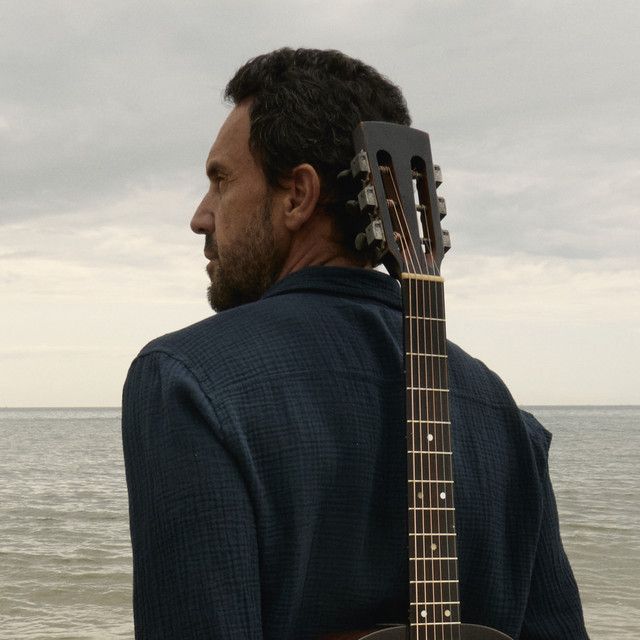
Jean-Louis Aubert

Chanson

Jean-Louis Aubert

About Jean-Louis Aubert

Best known for his decade-long tenure fronting the influential French rock band Telephone, Jean-Louis Aubert subsequently forged a successful solo career that tackled more personal themes and more complex musical ideas than his previous efforts foreshadowed. Born April 12, 1955, in Nantua, Aubert was the son of a sub-prefect, and raised largely by his parents' servants. A difficult and rebellious teenage period followed, and at 16 he hitchhiked across the U.S., busking on city streets and singing Rolling Stones covers to survive. Upon returning to Paris, Aubert befriended bassist Daniel Roux and drummer Richard Kolinka, with whom he co-founded the band Sémolina -- their lone WEA single, "Et J'y Vais Déjà," vanished upon release, however, and the trio quickly split. Aubert next entered the musicology program at Paris University, but remained dedicated to a performing career, regularly jamming with Kolinka in the cellar of their home. In late autumn of 1976, Kolinka secured a gig at Paris' American Centre, but when his steady band was unable to commit to the date, he and Aubert recruited guitarist Louis Bertignac and bassist Corine Marienneau to assemble a set list comprised of classic rock hits and Aubert's first original compositions. On November 12, Telephone made their debut performance, playing a largely improvised set to a few hundred patrons. Loud, snotty, and defiantly primitive, the band effectively reinvigorated French rock in one fell swoop. Though by no means the classic frontman, Aubert nevertheless transcended his limits as a vocalist and guitarist with sheer aggressive energy, becoming the poster boy for a new generation of French rock icons. After a famously raucous March 1977 appearance at the Paris Metro, Telephone toured in support of British act Eddie & the Hot Rods, followed by a date opening for the seminal American band Television. A June 8th performance at Paris' Bus Palladium yielded Telephone's debut single, "Hygiaphone." Six weeks later, the quartet signed to Pathé-Marconi, teaming with producer Mike Thorne for its self-titled debut LP, issued in November. With the 1979 follow-up, Crache Ton Venin, Telephone rocketed to superstardom -- the single "La Bombe Humaine" emerged as a generational anthem, and the album sold in excess of 600,000 copies, capped off by a performance at the annual Fête de l'Humanité in front of an audience of more than 100,000 people. Tours of Italy, Spain, and North America followed, and while in New York, Telephone began work on their third album, 1981's Au Coeur de la Nuit. After signing to Virgin, the group released Dure Limite in conjunction with their June 14, 1982, Paris concert in support of the Rolling Stones. Another American tour followed, but creative dissension began to grow, and breakup rumors reached a fever pitch in the wake of 1984's Un Autre Monde, as all four members of Telephone began to pursue solo projects; Aubert contributed to an Ethiopian benefit LP recorded by the all-star Chanteurs sans Frontiéres. Finally, in April 1986 he announced the band's demise -- a subsequent live LP proved a bestseller around the same time Aubert and Kolinka reunited with Sémolina bassist Daniel Roux under the name Aubert 'n' Ko, releasing the funk-inspired album Platre et Ciment in 1987. Aubert launched his solo career in full with 1989's self-produced Bleu Blanc Vert, an intimate and often pastoral album in sharp contrast with his work in Telephone. Its 1992 follow-up, H, proved even more idiosyncratic, while a subsequent tour with Kolinka was documented via the live effort Une Page de Tournée. After guesting on a session headlined by chanson legend Barbara, Aubert returned to work on his next project, 1997's Stockholm, which featured cameos by artists as far-ranging as Nigerian percussion legend Tony Allen and Swedish pop producer Gordon Cyrus. While the thematic and stylistic changes of each successive solo record gradually diminished Aubert's fan base, he nevertheless continued to experiment with sounds and personnel, and with 2001's Comme un Accord, he made the first record of his career without contributions from Richard Kolinka. After a series of self-produced efforts, Aubert handed the reins to Renaud Letang, previously known for helming sessions by Manu Chao and Alain Souchon. Upon topping the French charts in 2003 with "Sur la Route," a duet with singer Raphael, Aubert resumed work on his next solo release, 2005's Ideal Standard, recorded in part with Canadian electroclash producer Gonzales. Premières Prises followed in 2009, while in 2012 Aubert released studio album Roc-éclair and live album Live Vivant. ~ Jason Ankeny, Rovi

Read more

Popular song

Jean-Louis Aubert fans also like

Jean-Louis Aubert's Tour

About Jean-Louis Aubert

Best known for his decade-long tenure fronting the influential French rock band Telephone, Jean-Louis Aubert subsequently forged a successful solo career that tackled more personal themes and more complex musical ideas than his previous efforts foreshadowed. Born April 12, 1955, in Nantua, Aubert was the son of a sub-prefect, and raised largely by his parents' servants. A difficult and rebellious teenage period followed, and at 16 he hitchhiked across the U.S., busking on city streets and singing Rolling Stones covers to survive. Upon returning to Paris, Aubert befriended bassist Daniel Roux and drummer Richard Kolinka, with whom he co-founded the band Sémolina -- their lone WEA single, "Et J'y Vais Déjà," vanished upon release, however, and the trio quickly split. Aubert next entered the musicology program at Paris University, but remained dedicated to a performing career, regularly jamming with Kolinka in the cellar of their home. In late autumn of 1976, Kolinka secured a gig at Paris' American Centre, but when his steady band was unable to commit to the date, he and Aubert recruited guitarist Louis Bertignac and bassist Corine Marienneau to assemble a set list comprised of classic rock hits and Aubert's first original compositions. On November 12, Telephone made their debut performance, playing a largely improvised set to a few hundred patrons. Loud, snotty, and defiantly primitive, the band effectively reinvigorated French rock in one fell swoop. Though by no means the classic frontman, Aubert nevertheless transcended his limits as a vocalist and guitarist with sheer aggressive energy, becoming the poster boy for a new generation of French rock icons. After a famously raucous March 1977 appearance at the Paris Metro, Telephone toured in support of British act Eddie & the Hot Rods, followed by a date opening for the seminal American band Television. A June 8th performance at Paris' Bus Palladium yielded Telephone's debut single, "Hygiaphone." Six weeks later, the quartet signed to Pathé-Marconi, teaming with producer Mike Thorne for its self-titled debut LP, issued in November. With the 1979 follow-up, Crache Ton Venin, Telephone rocketed to superstardom -- the single "La Bombe Humaine" emerged as a generational anthem, and the album sold in excess of 600,000 copies, capped off by a performance at the annual Fête de l'Humanité in front of an audience of more than 100,000 people. Tours of Italy, Spain, and North America followed, and while in New York, Telephone began work on their third album, 1981's Au Coeur de la Nuit. After signing to Virgin, the group released Dure Limite in conjunction with their June 14, 1982, Paris concert in support of the Rolling Stones. Another American tour followed, but creative dissension began to grow, and breakup rumors reached a fever pitch in the wake of 1984's Un Autre Monde, as all four members of Telephone began to pursue solo projects; Aubert contributed to an Ethiopian benefit LP recorded by the all-star Chanteurs sans Frontiéres. Finally, in April 1986 he announced the band's demise -- a subsequent live LP proved a bestseller around the same time Aubert and Kolinka reunited with Sémolina bassist Daniel Roux under the name Aubert 'n' Ko, releasing the funk-inspired album Platre et Ciment in 1987. Aubert launched his solo career in full with 1989's self-produced Bleu Blanc Vert, an intimate and often pastoral album in sharp contrast with his work in Telephone. Its 1992 follow-up, H, proved even more idiosyncratic, while a subsequent tour with Kolinka was documented via the live effort Une Page de Tournée. After guesting on a session headlined by chanson legend Barbara, Aubert returned to work on his next project, 1997's Stockholm, which featured cameos by artists as far-ranging as Nigerian percussion legend Tony Allen and Swedish pop producer Gordon Cyrus. While the thematic and stylistic changes of each successive solo record gradually diminished Aubert's fan base, he nevertheless continued to experiment with sounds and personnel, and with 2001's Comme un Accord, he made the first record of his career without contributions from Richard Kolinka. After a series of self-produced efforts, Aubert handed the reins to Renaud Letang, previously known for helming sessions by Manu Chao and Alain Souchon. Upon topping the French charts in 2003 with "Sur la Route," a duet with singer Raphael, Aubert resumed work on his next solo release, 2005's Ideal Standard, recorded in part with Canadian electroclash producer Gonzales. Premières Prises followed in 2009, while in 2012 Aubert released studio album Roc-éclair and live album Live Vivant. ~ Jason Ankeny, Rovi

Jean-Louis Aubert's Concerts & Tour Dates

Date Event name Venue
25 Jun 2026 Jean-Louis Aubert in Saint-maurice-de-rémens Le Printemps de Pérouges, Villeurbanne, RH, France
10 Jul 2026 Jean-Louis Aubert, Ben Harper And The Innocent Criminals in Addis Ababa, AA, Ethiopia
26 Jul 2026 Jean-Louis Aubert, Julien Lieb in MARTIGUES La Halle - Esplanade Extérieure, Martigues, PR, France

Jean-Louis Aubert's Popular songs

  • Merveille
  • Alter ego Version 2008
  • Sur la route

Frequently Asked Questions

Best known for his decade-long tenure fronting the influential French rock band Telephone, Jean-Louis Aubert subsequently forged a successful solo career that tackled more personal themes and more complex musical ideas than his previous efforts foreshadowed. Born April 12, 1955, in Nantua, Aubert…
Jean-Louis Aubert's most streamed songs include Merveille, Alter ego Version 2008, Sur la route. These tracks have accumulated millions of plays on Spotify and other major streaming platforms, making them essential listens for both new fans and long-time followers.
Jean-Louis Aubert is primarily known for chanson, frequently fusing it with elements of french pop. This genre-blending approach has earned them a dedicated global fanbase and consistent chart placements on platforms like Beatport and Spotify.
You can stream Jean-Louis Aubert's music on Spotify, Apple Music, YouTube Music, and Amazon Music. Popular tracks like Merveille, Alter ego Version 2008, Sur la route are available on all major platforms. Follow Jean-Louis Aubert on Spotify to stay updated on new releases.
Jean-Louis Aubert has over 554.9K+ monthly listeners on Spotify, reflecting a strong and growing global fanbase.
Jean-Louis Aubert is currently scheduled to perform in 3 cities: Villeurbanne, Addis Ababa, Martigues. Visit AllEvents to find show dates, venues, and ticket details for a city near you.
Jean-Louis Aubert's 2026 tour spans 2 countries: France, Ethiopia. Check AllEvents for the full Jean-Louis Aubert tour schedule, including dates, venues, and tickets in each country.
You can also follow Jean-Louis Aubert on AllEvents to get notified about upcoming concerts and live events near you.
You can find and buy tickets for Jean-Louis Aubert concerts on AllEvents. Browse upcoming shows, compare dates and venues, and secure your spot before they sell out. Jean-Louis Aubert is known for high-energy live performances, so tickets tend to go fast.