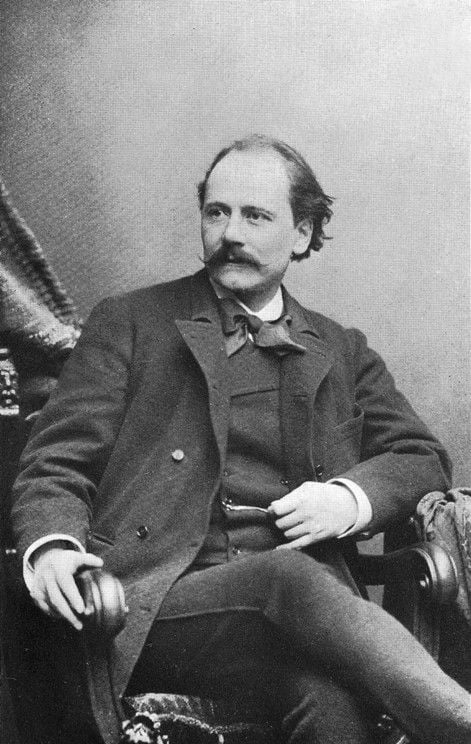
Camille Saint-Saëns

Classical

Camille Saint-Saëns

Upcoming Camille Saint-Saëns Tour

No Events
Artist isn’t on tour right now. Be the first to know when shows come up


About Camille Saint-Saëns

Camille Saint-Saëns was something of an anomaly among French composers of the nineteenth century in that he wrote in virtually all genres, including opera, symphonies, concertos, songs, sacred and secular choral music, solo piano, and chamber music. He was generally not a pioneer, though he did help to revive some earlier and largely forgotten dance forms, like the bourée and gavotte. He was a conservative who wrote many popular scores scattered throughout the various genres: the Piano Concerto No. 2, Symphony No. 3 ("Organ"), the symphonic poem Danse macabre, the opera Samson et Dalila, and probably his most widely performed work, The Carnival of The Animals. While he remained a composer closely tied to tradition and traditional forms in his later years, he did develop a more arid style, less colorful and, in the end, less appealing. He was also a poet and playwright of some distinction. Saint-Saëns was born in Paris on October 9, 1835. He was one of the most precocious musicians ever, beginning piano lessons with his aunt at two-and-a-half and composing his first work at three. At age seven he studied composition with Pierre Maledin. When he was ten, he gave a concert that included Beethoven's Third Piano Concerto, Mozart's B flat Concerto, K. 460, along with works by Bach, Handel, and Hummel. In his academic studies, he displayed the same genius, learning languages and advanced mathematics with ease and celerity. He would also develop keen, lifelong interests in geology and astronomy. In 1848, he entered the Paris Conservatory and studied organ and composition, the latter with Halévy. By his early twenties, following the composition of two symphonies, he had won the admiration and support of Berlioz, Liszt, Gounod, Rossini, and other notable figures. From 1853 to 1876, he held church organist posts; he also taught at the École Niedermeyer (1861-1865). He composed much throughout his early years, turning out the 1853 Symphony in F ("Urbs Roma"), a Mass (1855) and several concertos, including the popular second, for piano (1868). In 1875, Saint-Saëns married the 19-year-old Marie Truffot, bringing on perhaps the saddest chapter in his life. The union produced two children who died within six weeks of each other, one from a four-story fall. The marriage ended in 1881. Oddly, this dark period in his life produced some of his most popular works, including Danse macabre (1875) and Samson et Dalila (1878). After the tragic events of his marriage, Saint-Saëns developed a fondness for Fauré and his family, acting as a second father to Fauré's children. But he also remained very close to his mother, who had opposed his marriage. When she died in 1888, the composer fell into a deep depression, even contemplating suicide for a time. He did much travel in the years that followed and developed an interest in Algeria and Egypt, which eventually inspired him to write Africa (1891) and his Piano Concerto No. 5, the "Egyptian". He also turned out works unrelated to exotic places, such as his popular and most enduring serious composition, the Symphony No. 3. Curiously, after 1890, Saint-Saëns' music was regarded with some condescension in his homeland, while in England and the United States he was hailed as France's greatest living composer well into the twentieth century. Saint-Saëns experienced an especially triumphant concert tour when he visited the U.S. in 1915. In the last two decades of his life, he remained attached to his dogs and was largely a loner. He died in Algeria on December 16, 1921.

Read more

Popular song

Camille Saint-Saëns fans also like

About Camille Saint-Saëns

Camille Saint-Saëns was something of an anomaly among French composers of the nineteenth century in that he wrote in virtually all genres, including opera, symphonies, concertos, songs, sacred and secular choral music, solo piano, and chamber music. He was generally not a pioneer, though he did help to revive some earlier and largely forgotten dance forms, like the bourée and gavotte. He was a conservative who wrote many popular scores scattered throughout the various genres: the Piano Concerto No. 2, Symphony No. 3 ("Organ"), the symphonic poem Danse macabre, the opera Samson et Dalila, and probably his most widely performed work, The Carnival of The Animals. While he remained a composer closely tied to tradition and traditional forms in his later years, he did develop a more arid style, less colorful and, in the end, less appealing. He was also a poet and playwright of some distinction. Saint-Saëns was born in Paris on October 9, 1835. He was one of the most precocious musicians ever, beginning piano lessons with his aunt at two-and-a-half and composing his first work at three. At age seven he studied composition with Pierre Maledin. When he was ten, he gave a concert that included Beethoven's Third Piano Concerto, Mozart's B flat Concerto, K. 460, along with works by Bach, Handel, and Hummel. In his academic studies, he displayed the same genius, learning languages and advanced mathematics with ease and celerity. He would also develop keen, lifelong interests in geology and astronomy. In 1848, he entered the Paris Conservatory and studied organ and composition, the latter with Halévy. By his early twenties, following the composition of two symphonies, he had won the admiration and support of Berlioz, Liszt, Gounod, Rossini, and other notable figures. From 1853 to 1876, he held church organist posts; he also taught at the École Niedermeyer (1861-1865). He composed much throughout his early years, turning out the 1853 Symphony in F ("Urbs Roma"), a Mass (1855) and several concertos, including the popular second, for piano (1868). In 1875, Saint-Saëns married the 19-year-old Marie Truffot, bringing on perhaps the saddest chapter in his life. The union produced two children who died within six weeks of each other, one from a four-story fall. The marriage ended in 1881. Oddly, this dark period in his life produced some of his most popular works, including Danse macabre (1875) and Samson et Dalila (1878). After the tragic events of his marriage, Saint-Saëns developed a fondness for Fauré and his family, acting as a second father to Fauré's children. But he also remained very close to his mother, who had opposed his marriage. When she died in 1888, the composer fell into a deep depression, even contemplating suicide for a time. He did much travel in the years that followed and developed an interest in Algeria and Egypt, which eventually inspired him to write Africa (1891) and his Piano Concerto No. 5, the "Egyptian". He also turned out works unrelated to exotic places, such as his popular and most enduring serious composition, the Symphony No. 3. Curiously, after 1890, Saint-Saëns' music was regarded with some condescension in his homeland, while in England and the United States he was hailed as France's greatest living composer well into the twentieth century. Saint-Saëns experienced an especially triumphant concert tour when he visited the U.S. in 1915. In the last two decades of his life, he remained attached to his dogs and was largely a loner. He died in Algeria on December 16, 1921.

Camille Saint-Saëns's Popular songs

  • Carnival of the Animals: The Swan
  • The Carnival of the Animals, R. 125: XIII. The Swan (Arr. for Cello and Piano)
  • Carnival of the Animals: The Swan - Arranged for Cello and Harp by Miriam Keogh

Frequently Asked Questions

Camille Saint-Saëns was something of an anomaly among French composers of the nineteenth century in that he wrote in virtually all genres, including opera, symphonies, concertos, songs, sacred and secular choral music, solo piano, and chamber music. He was generally not a pioneer, though he did …
Camille Saint-Saëns's most streamed songs include Carnival of the Animals: The Swan, The Carnival of the Animals, R. 125: XIII. The Swan (Arr. for Cello and Piano), Carnival of the Animals: The Swan - Arranged for Cello and Harp by Miriam Keogh. These tracks have accumulated millions of plays on Spotify and other major streaming platforms, making them essential listens for both new fans and long-time followers.
Camille Saint-Saëns is primarily known for classical, frequently fusing it with elements of french romanticism. This genre-blending approach has earned them a dedicated global fanbase and consistent chart placements on platforms like Beatport and Spotify.
You can stream Camille Saint-Saëns's music on Spotify, Apple Music, YouTube Music, and Amazon Music. Popular tracks like Carnival of the Animals: The Swan, The Carnival of the Animals, R. 125: XIII. The Swan (Arr. for Cello and Piano), Carnival of the Animals: The Swan - Arranged for Cello and Harp by Miriam Keogh are available on all major platforms. Follow Camille Saint-Saëns on Spotify to stay updated on new releases.
Camille Saint-Saëns has over 4.6M+ monthly listeners on Spotify, reflecting a strong and growing global fanbase.
You can also follow Camille Saint-Saëns on AllEvents to get notified about upcoming concerts and live events near you.
You can find and buy tickets for Camille Saint-Saëns concerts on AllEvents. Browse upcoming shows, compare dates and venues, and secure your spot before they sell out. Camille Saint-Saëns is known for high-energy live performances, so tickets tend to go fast.