Aram Khachaturian

Caucasian Classical

Aram Khachaturian

Upcoming Aram Khachaturian Tour

No Events
Artist isn’t on tour right now. Be the first to know when shows come up


About Aram Khachaturian

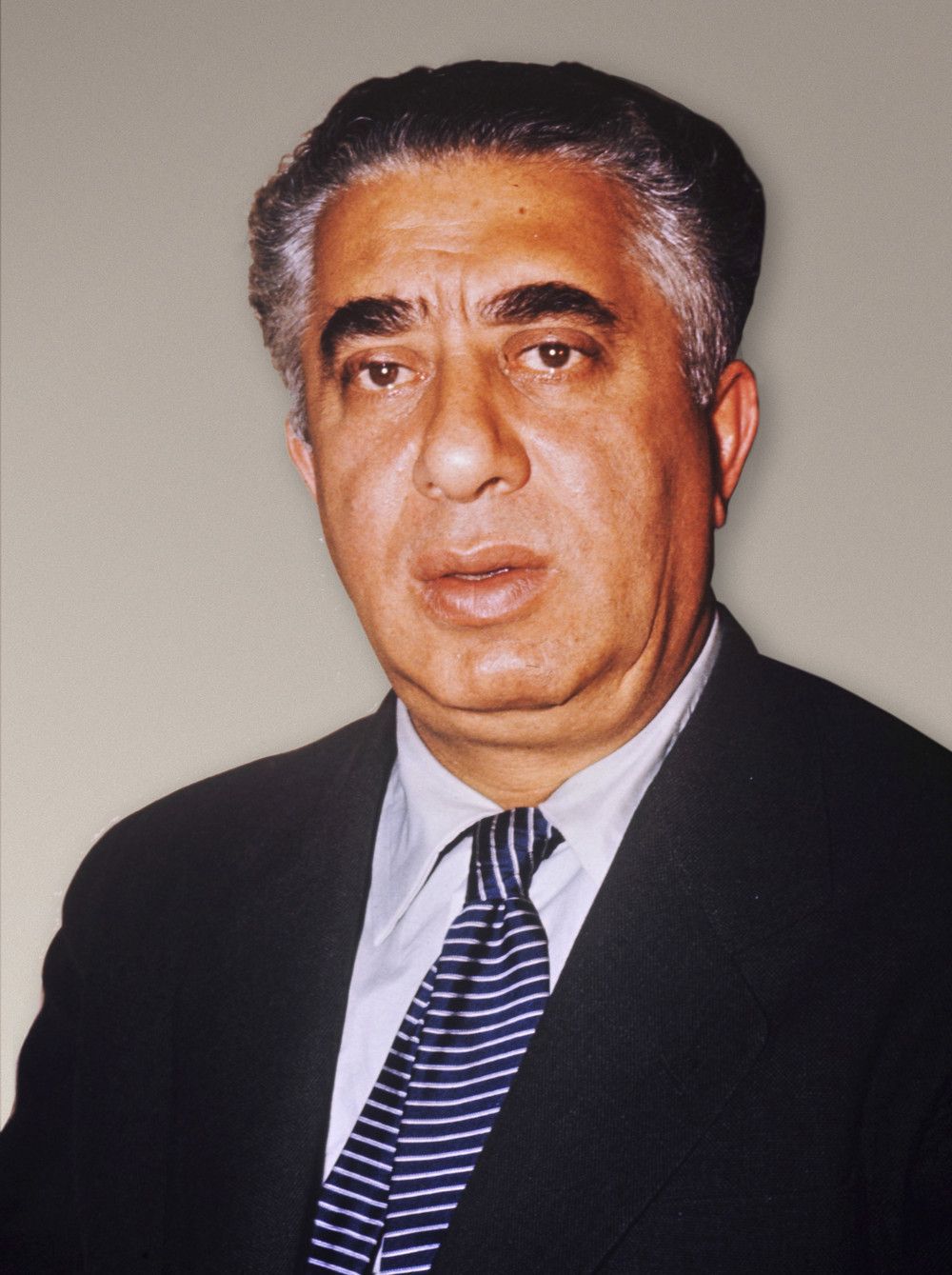
Although he was indicted (along with Shostakovich, Prokofiev, and a number of other prominent Soviet musicians) for "formalism," in the infamous Zhdanov decree of 1948, Aram Khachaturian was, for most of his long career, one of the Soviet musical establishment's most prized representatives. Born into an Armenian family, in Tbilisi, in 1903, Khachaturian's musical identity formed slowly, and, although a tuba player in his school band and a self-taught pianist, he wanted to be a biologist, and did not study music formally until entering Moscow's Gnesin Music Academy (as a cellist) in 1922. His considerable musical talents soon manifested themselves, and by 1925 he was studying composition privately with Gnesin himself. In 1929, Khachaturian joined Miaskovsky's composition class at the Moscow Conservatory. Khachaturian graduated in 1934, and before the completion, in 1937, of his postgraduate studies, the successful premieres of such works as the Symphony No. 2 in A Minor "With a Bell" (1935) and, especially, the Piano Concerto in D flat Major (1936) established Khachaturian as the leading Soviet composer of his generation. During the vicious government-sponsored attacks, in 1948, on the Soviet Composers' Union (in which Khachaturian, an active member since 1937, also held an administrative function) Khachaturian took a great deal of criticism. However, although he was officially censured for employing modernistic, politically incorrect musical techniques which fostered an "anti-people art," Khachaturian's music contained few, if any, of the objectionable traits found in the music of some of his more adventuresome colleagues. In retrospect, it was most likely Khachaturian's administrative role in the Union, perceived by the government as a bastion of politically incorrect music, and not his music as such, which earned him a place on the black list of 1948. Nevertheless, Khachaturian made a very full and humble apology for his artistic "errors" following the Zhdanov decree; his musical style, however, underwent no changes. Khachaturian joined the composition faculty of the Moscow Conservatory and the Gnesin Academy in 1950, and that same year he made his debut as a conductor. During the years until his death in 1978 Khachaturian made frequent European conducting appearances, and in January of 1968 he made a culturally significant trip to Washington, D.C., conducting the National Symphony Orchestra in a program of his own works. Khachaturian's characteristic musical style draws on the melodic and rhythmic vitality of Armenian folk music. Although not adverse to sharp dissonance, Khachaturian never strayed from a basically diatonic musical language. The Piano Concerto and the Violin Concerto in D Minor are truly Romantic works, virtuosic, clear, and unaffectedly expressive, remaining therefore popular and frequently performed composition. Of course, many neither of these works matches the popularity of the famous "Sabre Dance" from the ballet Gayane, which made Khachaturian a household name during World War II. His other works include film scores, songs, piano pieces, and chamber music. The degree of Khachaturian's success as a Soviet composer can be measured by his many honors, which include the 1941 Lenin Prize, for the Violin Concerto, the 1959 Stalin Prize, for the ballet Spartacus, and the title, awarded in 1954, of People's Artist.

Read more

Popular song

Aram Khachaturian fans also like

About Aram Khachaturian

Although he was indicted (along with Shostakovich, Prokofiev, and a number of other prominent Soviet musicians) for "formalism," in the infamous Zhdanov decree of 1948, Aram Khachaturian was, for most of his long career, one of the Soviet musical establishment's most prized representatives. Born into an Armenian family, in Tbilisi, in 1903, Khachaturian's musical identity formed slowly, and, although a tuba player in his school band and a self-taught pianist, he wanted to be a biologist, and did not study music formally until entering Moscow's Gnesin Music Academy (as a cellist) in 1922. His considerable musical talents soon manifested themselves, and by 1925 he was studying composition privately with Gnesin himself. In 1929, Khachaturian joined Miaskovsky's composition class at the Moscow Conservatory. Khachaturian graduated in 1934, and before the completion, in 1937, of his postgraduate studies, the successful premieres of such works as the Symphony No. 2 in A Minor "With a Bell" (1935) and, especially, the Piano Concerto in D flat Major (1936) established Khachaturian as the leading Soviet composer of his generation. During the vicious government-sponsored attacks, in 1948, on the Soviet Composers' Union (in which Khachaturian, an active member since 1937, also held an administrative function) Khachaturian took a great deal of criticism. However, although he was officially censured for employing modernistic, politically incorrect musical techniques which fostered an "anti-people art," Khachaturian's music contained few, if any, of the objectionable traits found in the music of some of his more adventuresome colleagues. In retrospect, it was most likely Khachaturian's administrative role in the Union, perceived by the government as a bastion of politically incorrect music, and not his music as such, which earned him a place on the black list of 1948. Nevertheless, Khachaturian made a very full and humble apology for his artistic "errors" following the Zhdanov decree; his musical style, however, underwent no changes. Khachaturian joined the composition faculty of the Moscow Conservatory and the Gnesin Academy in 1950, and that same year he made his debut as a conductor. During the years until his death in 1978 Khachaturian made frequent European conducting appearances, and in January of 1968 he made a culturally significant trip to Washington, D.C., conducting the National Symphony Orchestra in a program of his own works. Khachaturian's characteristic musical style draws on the melodic and rhythmic vitality of Armenian folk music. Although not adverse to sharp dissonance, Khachaturian never strayed from a basically diatonic musical language. The Piano Concerto and the Violin Concerto in D Minor are truly Romantic works, virtuosic, clear, and unaffectedly expressive, remaining therefore popular and frequently performed composition. Of course, many neither of these works matches the popularity of the famous "Sabre Dance" from the ballet Gayane, which made Khachaturian a household name during World War II. His other works include film scores, songs, piano pieces, and chamber music. The degree of Khachaturian's success as a Soviet composer can be measured by his many honors, which include the 1941 Lenin Prize, for the Violin Concerto, the 1959 Stalin Prize, for the ballet Spartacus, and the title, awarded in 1954, of People's Artist.
Aram Khachaturian's Popular songs

  • Masquerade Suite: Waltz
  • Children's Album No. 1 "Pictures of Childhood": No. 1, Andantino
  • Spartacus: Adagio of Spartacus and Phrygia

Frequently Asked Questions

Some of Aram Khachaturian's most popular songs include Masquerade Suite: Waltz, Children's Album No. 1 "Pictures of Childhood": No. 1, Andantino, Spartacus: Adagio of Spartacus and Phrygia. These tracks have impressed fans and helped cement their place in the music industry.

You can listen to Aram Khachaturian's music on all major streaming platforms, including Spotify, Apple Music, and YouTube. Their most popular songs include Masquerade Suite: Waltz, Children's Album No. 1 "Pictures of Childhood": No. 1, Andantino, Spartacus: Adagio of Spartacus and Phrygia, and more.

Aram Khachaturian is known for their distinctive sound in the caucasian classical genre, often blending elements of classical, making them a unique voice in the music world.

You can find the ticket details about Aram Khachaturian concert from AllEvents.