
Common Event Marketing Mistakes That Are Quietly Hurting Your Trade Show ROI

Every exhibitor packs away their display at the end of a trade show thinking it went well. The hall was busy, the staff were tired in a good way, and the pile of scanned badges looked promising. Then six weeks pass, the leads have gone cold, nobody can say for certain what the show actually returned, and the same mistakes quietly repeat at the next event.
Trade show ROI doesn’t normally crash because of one grand failure. Small mistakes made before, during, and after an event are rarely picked apart at the time, because on their own, none of them look serious enough to flag. This breaks down where exhibitors usually lose that value, and what to do differently at each stage.
Seven mistakes — from picking the wrong show to measuring returns too early — that compound across the pre-show, on-floor, and post-show stages, plus the fix for each one. None of them cost extra money to correct.
The reason these errors are so costly is that they build on each other. If the pre-show push is poor, fewer of the right people know to come. A booth built without a clear aim makes it harder to convert the traffic that does show up. When conversations do happen, they’re wasted on booth staff who haven’t been briefed, and a lack of follow-up plan means even good leads go cold. None of these individually sinks a trade show program. Together, they quietly explain why so many companies exhibit year after year without ever being entirely sure whether it’s working.
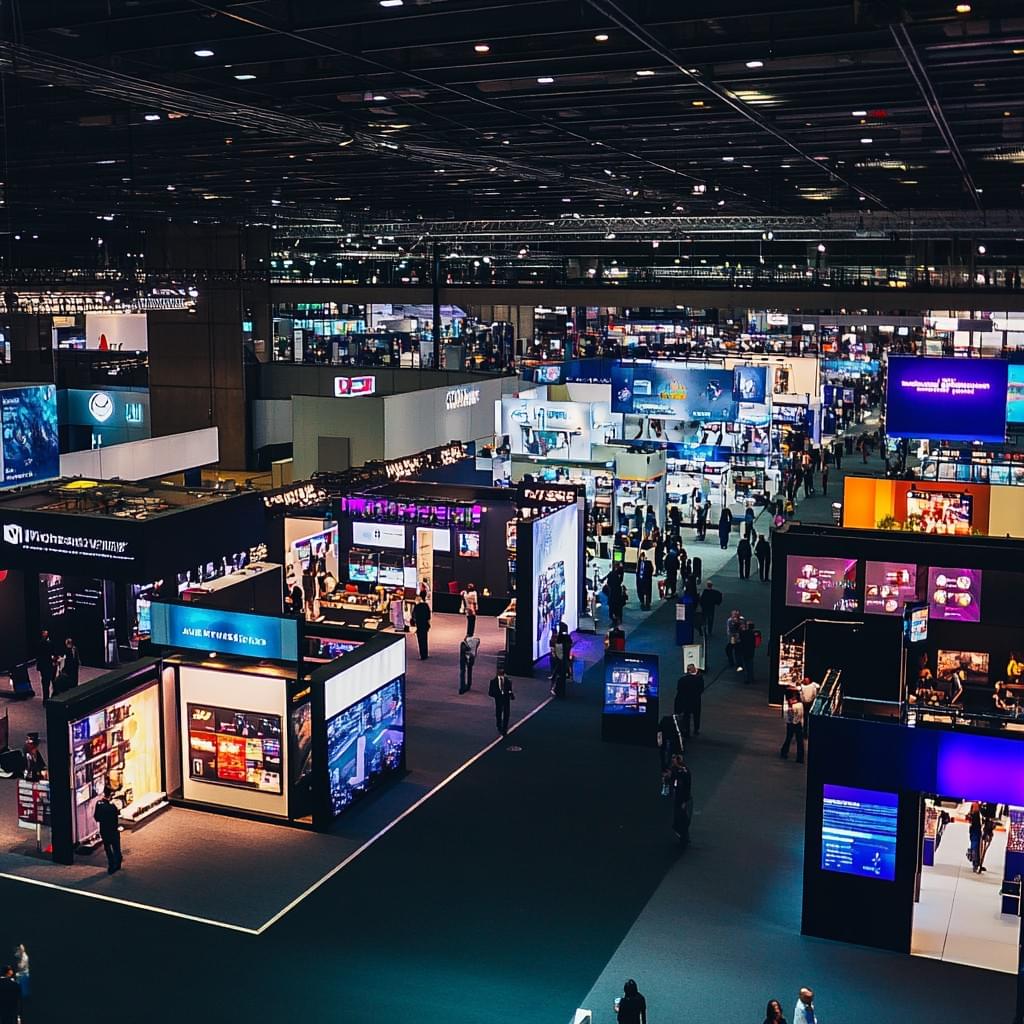
Where Trade Show ROI Quietly Gets Lost
The mistakes below rarely show up as a single obvious failure. They are minor, easily overlooked decisions made weeks before the event, on the floor during the show, and in the days after it concludes. None of them cost extra to fix — only more careful preparation at each stage.
Mistake 1: Exhibiting at the Wrong Show, or the Wrong Spot
Before any conversation about booth design or trade show marketing happens, there’s a more fundamental question to answer: is this even the right show? Exhibitors regularly commit budget to events based on size or reputation, without checking whether their actual target buyers attend.
- Choosing a show for its popularity or name recognition, without confirming that the buyers you want to reach will actually be there.
- Choosing a stand location on cost alone, without weighing visibility, foot traffic, or proximity to exhibitors who complement what you do.
- Taking a cheap spot behind a pillar or far from the entrance because it looks like good value on paper, when it usually produces far fewer useful meetings than a pricier, better-positioned one.
However well designed the booth or well briefed the team, none of it matters if you’re presenting to the wrong audience in a spot nobody walks past. That decision gets made months before the show, and it quietly caps how well every later stage can perform.
If you’re building a shortlist rather than rebooking out of habit, it’s worth browsing upcoming trade shows and exhibitions by city and checking each one against your actual buyer profile before committing budget.
Mistake 2: Treating Pre-Show Marketing as an Afterthought
Good event marketing begins weeks before the show opens, not on move-in day. One of the biggest misconceptions in exhibiting is that foot traffic alone will bring visitors to your booth — and then exhibitors wonder why so few people stop.
- Announcing your presence only a few days out, missing the window when attendees are planning which booths to visit.
- Sending generic mass invitations to target accounts instead of personalized messages.
- Giving no specific reason to visit — a demo, a launch, an expert session — beyond “come and see us.”
Attendees plan their time on the show floor in advance, based on what they’ve seen on social media, in email invitations, and on the event app. If you miss that window, you don’t just get less traffic — you hand your target accounts to competitors who reached their inbox weeks earlier.
Personalization is the part most often skipped, because segmenting a list feels like work the events team doesn’t have time for four weeks out. If the audience you want already sits on a platform — followers, past attendees, people who marked interest in a previous event — running the invitations from there rather than rebuilding a list is usually the difference between doing it and not. AllEvents handles this through email campaigns, which send from the organizer dashboard with a CSV or Gmail import for the target accounts you’re adding by hand.
Many exhibitors treat pre-show marketing as something the events team handles separately from the rest of the company’s marketing calendar, when it should sit inside the same event marketing strategy as everything else. A trade show works best as one stage in a continuing conversation with a target account, not as a three-day sprint in isolation. Companies that fold pre-show outreach into an existing nurture sequence, rather than building one from scratch, consistently get better booth visits from the accounts that matter most.
The mechanics of this aren’t unique to B2B exhibiting. This breakdown of Why Vegas Show Bands Stopped Running Its Own Event Ads shows the same principle applied to driving attendance rather than booth visits.
Mistake 3: Building Exhibition Stands Without a Clear Goal
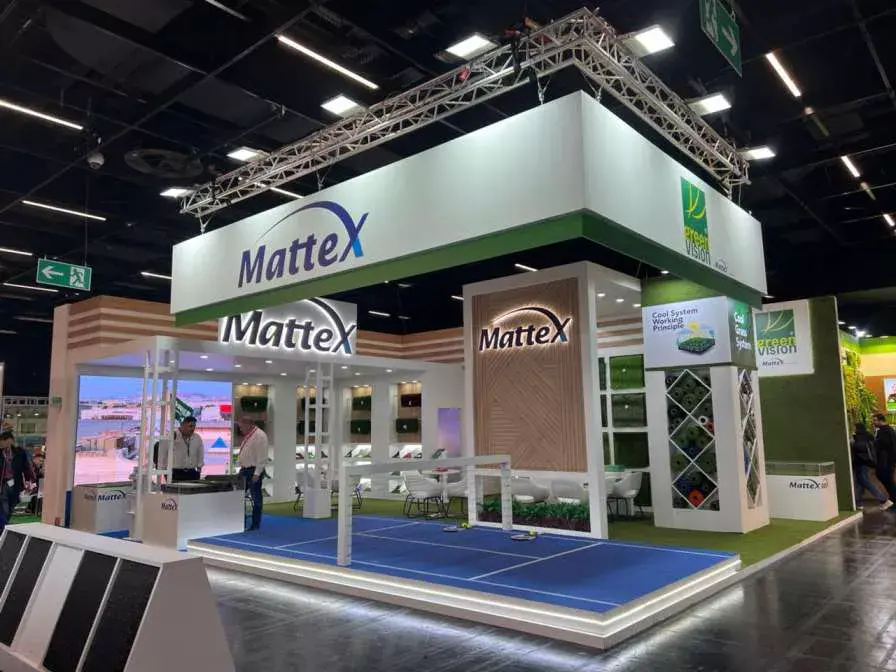
Building an exhibition stand is a serious expense, and far too often exhibitors run the design process in the wrong order — choosing visuals and layout first, then working out what the stand is actually supposed to do almost as an afterthought.
A booth built without a clear purpose — lead generation, product launch, brand awareness — usually ends up attempting all three at once and doing none of them well. The result reads as busy but meaningless, and the team working it aren’t sure what they should be saying to start a conversation.
- Choosing visuals, furniture, and layout before deciding what the booth actually needs to achieve.
- Packing the space with text and furniture until there’s no open sightline from the aisle — attendees don’t want to stop at booths that feel visually and physically blocked.
- Leaving the booth’s purpose unclear, so attendees can’t tell within seconds why they should stop rather than walk past.
It helps to approach an exhibition stand the way you’d approach a landing page: every element should push toward one action. A homepage selling five things at once with no clear call to action rarely converts, and a booth is no different.
Mistake 4: Using Untrained or Unbriefed Staff at Your Booth
Even the best-designed booth with a strong pre-show campaign behind it will fall flat if the people standing in it aren’t prepared. This is one of the most common exhibitor problems and one of the most fixable. It’s rarely about hiring the wrong people — it’s about not briefing the right ones.
- Staff who don’t know the booth’s specific goal for that show, and default to generic small talk instead of qualifying conversations.
- No assigned roles, so either everyone clusters near the entrance or, just as commonly, everyone disappears to the back of the booth at once.
- Team members who can’t speak confidently about pricing, next steps, or how to hand a hot lead to sales in the moment.
A short morning briefing covering the day’s objective, the key talking points, and who does what will beat an unbriefed team of naturally good salespeople every time. Enthusiasm is no substitute for direction.
Mistake 5: Gathering Leads Without a Follow-Up Plan
This is where trade show ROI is most often lost — not on the show floor, but in the weeks immediately after. A follow-up strategy that isn’t planned before the show starts almost never gets executed well once the team is back at their desks catching up on everything else.
- Leads sitting untouched for one to two weeks after the show, by which point the prospect has often already spoken to a competitor.
- Follow-up emails sent to every lead regardless of what was actually discussed at the booth.
- No way to tell serious leads from random badge scans, so salespeople work through a long, unsorted list.
The best trade show follow-up strategy isn’t an afterthought but something planned in advance: a same-week thank-you, a follow-up sequence based on what was actually discussed, and a clear hand-off to sales for the leads that matter most.
Being specific about timing matters here, because general advice like “follow up quickly” rarely changes behavior. Forty-eight to seventy-two hours is a reasonable standard for initial contact, while the conversation is still fresh for the prospect. A second touchpoint within the week, referencing something specific from the booth conversation, will consistently outperform a generic check-in.
Mistake 6: Failing to Debrief After the Show
The team goes home and everyone returns to their usual work. If there’s a debrief at all, it tends to be a quick conversation rather than a written review, and whatever was learned is forgotten before the next show comes round.
- Keeping no record of what worked and what didn’t, so the same mistakes in booth layout or messaging reappear a year later with a team that has forgotten the lesson.
- Letting the booth staff’s read on what attendees responded to go uncaptured, so it never reaches the people planning the next show.
- Having nothing to compare against the last show, so there’s no way to tell whether performance is genuinely improving or simply holding flat.
A short, scheduled discussion within a week of the show — what worked, what didn’t, what to change next time — turns each event into institutional knowledge rather than a one-off experience. Without it, every trade show program effectively starts again from scratch, however many shows the company has done.
Mistake 7: Not Knowing How to Measure Trade Show ROI
Most exhibitors describe the last show in terms of a feeling rather than a number. Measuring trade show ROI properly means comparing the full cost of exhibiting against what actually came back, on a realistic timeline.
- Counting only the floor-space cost and leaving out design, staff time, travel, and materials, so the comparison against results is skewed from the start.
- Stopping the count at “captured” leads instead of tracking them through to revenue, since a lead that never gets contacted again didn’t generate any return at all.
- Measuring ROI at the 30-day mark, when B2B trade show deals often take months to close, which will always make the channel look weaker than it actually performed.
Without that discipline, a genuinely successful show can look like a failure, and a mediocre one can get booked again next year because nobody measured it well enough to tell the difference.
One straightforward way to build the habit is to write down the full cost, the goal, and the specific date you’ll review results against that goal before the next show starts. Reviewing at 90 days rather than 30 gives trade show deals — which usually take longer to close than online leads — a real chance to show up in the figures. Often that single timing change is enough to reveal that a program written off as underperforming was performing all along.
The same discipline is worth applying one level down, to the pre-show campaign itself. If you can’t tell whether booth visits came from the email sequence, the LinkedIn posts, or the event listing, you’ll fund all three again next year at the same cost without knowing which one earned it. Giving each channel its own trackable link fixes that cheaply — AE Links generates short branded URLs with UTM tags per channel and reports views, clicks, and conversions against each one.
Trade Show Best Practices to Course-Correct
Correcting these seven mistakes doesn’t require spending more money. It requires treating the event — before, during, and after — as one connected plan rather than a string of separate activities run by different people at different times, who often compare notes only when it’s too late to change anything.
Here’s a fuller breakdown of what good practice looks like at each stage.
Before the Show
- Don’t book a show on its attendance stats or reputation alone. Review every show against your real target customer profile before committing.
- Choose booth position on visibility and traffic flow, not just price. A better-positioned space often repays the difference many times over in quality conversations.
- Begin pre-show marketing four to six weeks out, targeting confirmed attendees rather than a generic list.
- Set one clear objective for the booth — lead generation, product launch, or brand exposure — before choosing any visuals or layout.
- Keep the layout open and uncluttered so the core message is readable within a few seconds from the aisle.
During the Show
- Start each day with a team briefing so everyone knows the day’s objectives, key messages, and their own responsibilities.
- Keep the booth staffed through the final day so visitors see an active, engaged business.
- Record more than contact details for each lead — capture what they asked about and what problem they’re trying to solve.
- Review performance daily and adjust messaging or staffing quickly if something isn’t working.
After the Show
- Follow up within 48 to 72 hours, while the conversation is still fresh.
- Debrief with the team within a week: what went well, what didn’t, and what to change next time.
- Don’t judge results too early. Measure exhibition ROI over a longer window, such as 90 days.
- Compare results against the previous show using the same metrics, so progress — or its absence — is actually visible over time.
For exhibitors looking to get the booth design piece right from the start, this breakdown of common booth design mistakes that cost leads goes deeper into the visibility and engagement issues covered above.
Where AllEvents Fits Into a Trade Show Program
Several of the mistakes above come down to information arriving too late: which shows your buyers actually attend, whether anyone knows you’ll be there, and how people register once they’ve decided to come. AllEvents covers all three, from either side of the hall.
Finding the right shows
Mistake 1 is a research problem before it’s a budget problem. Trade show and B2B event listings are browsable by city, industry, and date, which turns building next year’s shortlist into a comparison exercise rather than a decision based on reputation and last year’s calendar. You can see what’s actually running in a market before committing to a stand.
Getting on attendees’ radar before the doors open
Mistake 2 is about visibility in the weeks when attendees are planning their floor time, and event listings are where a lot of that planning starts. Publishing your event, session, or launch places it in front of people already searching that city and category — the audience most likely to add you to their route before they arrive. If you’d rather hand the campaign over than run it in-house, the promotion plans put an AllEvents marketing team on it, though they need at least a week’s run-up before the doors open to show anything.
Promoting the things you run around the show
Side events, demos, and launch parties are often where the best conversations happen, and they rarely get promoted beyond a few emails. The event promotion tools handle distribution across social, email, and city and category feeds, so a side event isn’t dependent on people already knowing you’re there. Once people have registered, a broadcast message reaches them by ticket type with the address, the timing, or a last-minute change — which is how you hold down no-shows at something competing with everything else on the floor that evening.
The last two are organizer-side rather than exhibitor-side. They apply if you’re running the event yourself — a summit, a customer dinner, a launch night — rather than taking a stand at someone else’s.
Registration and ticketing, if you’re running the show
For organizers rather than exhibitors, ticketing and registration covers paid tickets, free registration, and on-site check-in, with attendee data flowing back afterwards. AE Pass handles the entry side of that, with branded digital passes and live QR verification in place of printed badges.
Telling “registered” apart from “actually turned up”
Mistakes 6 and 7 both come down to missing numbers, and the most useful one is the gap between registrations taken and people in the room. Check-in analytics tracks arrivals by ticket type, staff scans, and how many guests are still outstanding while the doors are open, so the debrief starts from recorded attendance rather than someone’s memory of how full it felt.
The Bottom Line
None of these mistakes are dramatic on their own. That’s exactly why they’re so easy to repeat, show after show, without anyone noticing the pattern. Trade show ROI isn’t about luck or booth size. It’s about how deliberately a company plans the marketing around the show, builds the stand, briefs the on-floor team, and follows up once everyone is home. Fix two or three of them and the next show stops being a gamble and starts being a repeatable source of pipeline.
The exhibitors who consistently get good results aren’t always the ones spending the most on the floor. They simply see the stages — pre-show promotion, booth design, staffing, follow-up — as connected parts of one system rather than five separate to-do lists handled by five different people who never quite compare notes. That shift in thinking costs nothing to make, and it’s often the difference between a trade show that pays for itself and one that quietly doesn’t.
Start With the Right Show
Compare what’s actually running in your market before you commit budget to a stand.
Browse Trade Shows in Your CityFAQs
What is a good ROI for a trade show?
There’s no single benchmark that applies to everyone. Figures commonly cited across the industry put trade show returns in the region of 4:1, and Trade Show Labs reports that 14% of Fortune 500 companies have recorded a 5:1 return from exhibiting. Treat these as rough context rather than a target — the number varies widely by industry, show size, and how well the follow-up is executed, which is why establishing your own baseline matters more than chasing an industry average.
How do you calculate trade show ROI?
Add up the full cost of exhibiting — booth space, design, staff time, travel, and materials — then measure it against the revenue generated from leads acquired at the event. The trick is to track leads all the way through to closed revenue rather than stopping at “leads captured,” and to choose an attribution window long enough to match your actual sales cycle rather than defaulting to 30 days.
Why do trade shows fail to generate ROI?
For most exhibitors it isn’t the show itself but what happens before and after it. Weak pre-show promotion, unclear booth objectives, unbriefed staff, slow follow-up, and short attribution windows all erode a show’s real return long before anyone starts measuring.

Written by
Laksha Nahata
Laksha Nahata writes about events and things to do at AllEvents. She spends most of her time figuring out what’s actually worth your time, what’s overhyped, and what you’d genuinely enjoy. Her work focuses on making plans easier, so you’re not stuck scrolling or second-guessing what to do next. If there’s something people are excited about, chances are she’s already looked into it.
View all posts